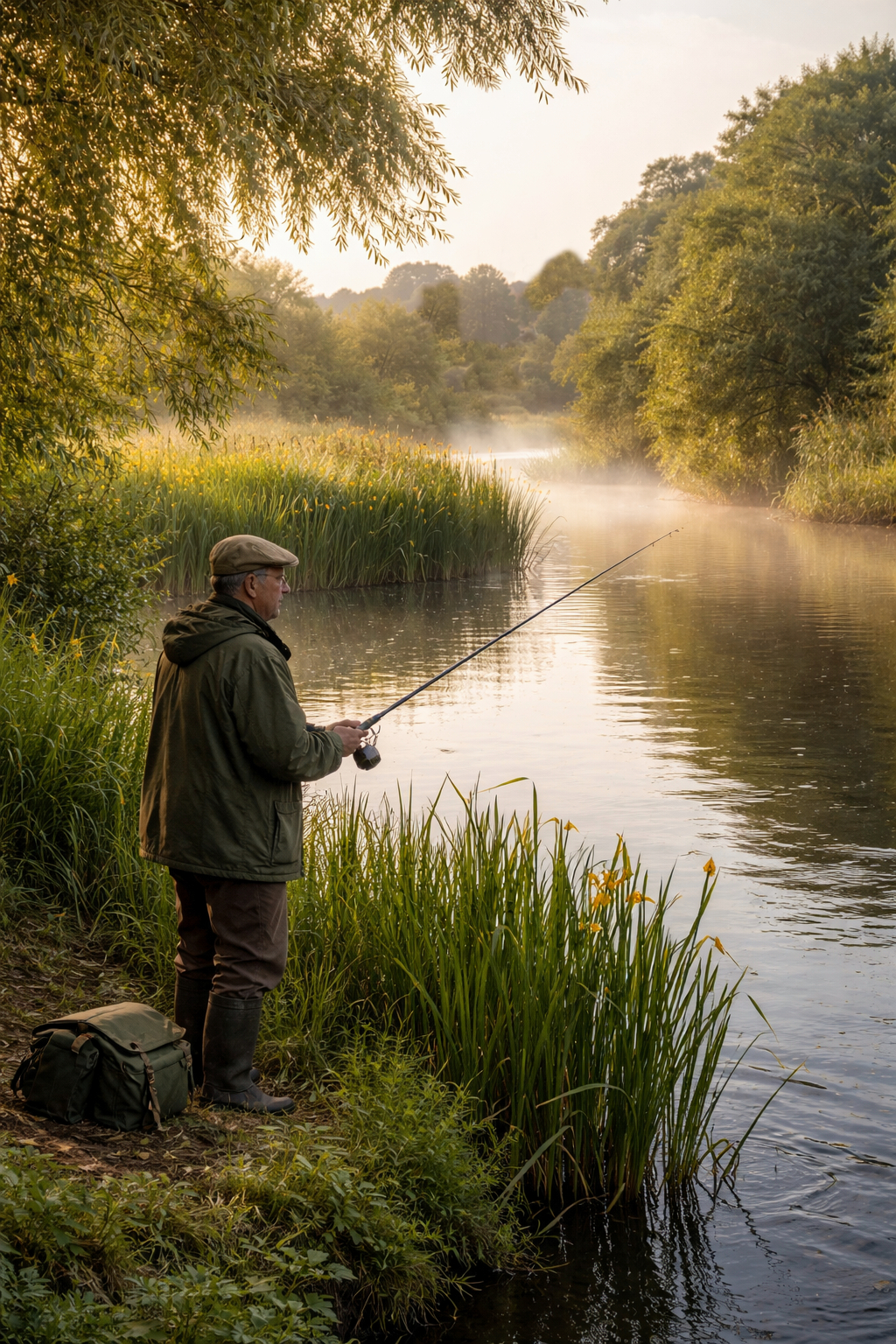
I came across a cheeky fisherman on the marsh last year, tucked into one of the river nooks I would choose myself if I ever felt the urge to sneak a fish from the place. He had chosen well. Slow water, a shaded bank, the sort of spot that makes my hands itch when I stand on the riverbank armed with nothing more than a walking stick and restraint.
He knew what he was looking at. You could tell by the way he read the water rather than just the surface, leaning slightly forward as though the river might whisper a tip or two if he paid it proper attention. He understood depth, cover, and the darker seam under the far bank where something might be watching back. It was good water, proper water, the kind that feels alive from edge to edge. He concentrated with the certainty of someone who considers the river as an old friend who has never let him down.
I told him, gently, that fishing is not allowed here. He took it well, which is usually a sign that someone has come for quiet rather than for taking. There was no huffing, no sudden interest in his boots or his knots. He nodded and said he was only after a bit of peace. Most people are. Some of them arrive with more equipment than is strictly necessary.
We stood together for a moment, looking at the water. He said this river needs to be fished slowly—light line, patience, letting the place settle before casting. I might not catch much, he said, but I enjoy the waiting. I told him: You can enjoy the waiting without the line. He smiled at that, as though the thought had occurred to him.
The fish here are spoken for, I said. Herons arrive with the morning, formal and unhurried. Kingfishers flash through like bits of joy on their way to somewhere more important. Otters come and go with the flow, eating well and caring very little what anyone else thinks. They do not need permission and leave the river as they find it. They belong to the place, and the place seems quietly fond of them in return.
The fisherman wound in, uncomplaining. He said it was the sort of water that stays with you after you walk away; that was well put. Some places you leave behind. Others walk a little way with you, then turn back once they are satisfied you know where you are going.
When he had gone, the marsh settled back and continued with its day. The water closed over where the line had been. Nothing looked altered, and that, in the end, is always the measure of a good encounter here.
The fisherman had arrived on the marsh with a plausible explanation: he had read on Google that Wyre Forest District Council allows free fishing on all stretches of the Stour through Kidderminster, except on Puxton Marsh, around 3 miles of fishing. However, this is not the case at Wilden Marsh, where fishing is not allowed.

Leave a Reply