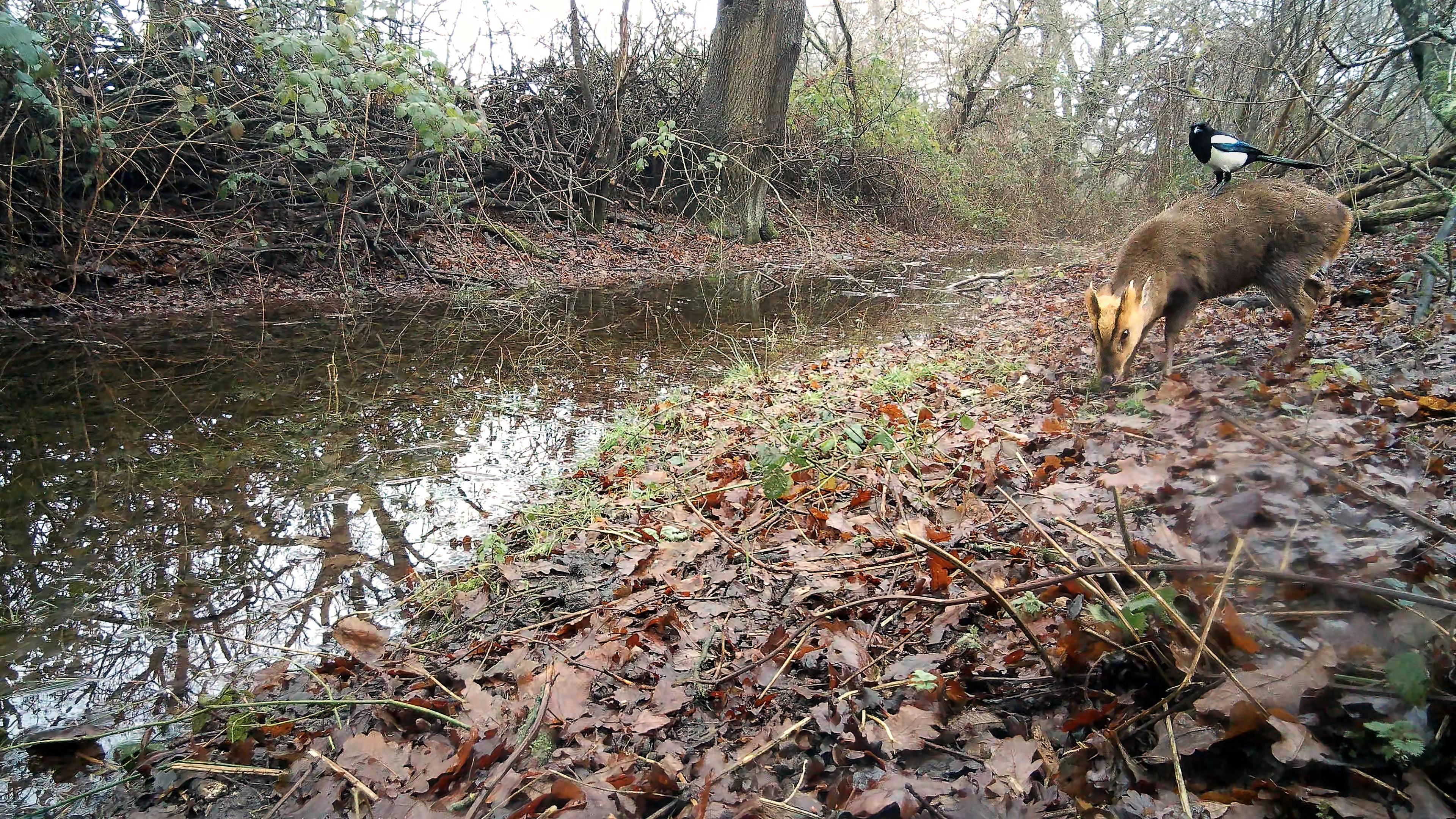
At this time of year, when marsh animals can be thin on the ground, there is always a hidden drainage ditch they return to, where they feel safe; it is just a matter of finding it and setting up a camera to record the action, as long as the camera trap is placed to avoid startling them. This south marsh ditch runs straight and narrow, cut by natural flow rather than by a tool or machine, and most people will pass it without a glance. It exists to carry water away, nothing more. The camera reveals this ditch as one of the busiest places on the marsh right now.
Water holds in the sunken hollow, the level slowly dropping while it waits for the next flood. The longer it sits, the darker it becomes. In winter, it is brimful, its surface still and cold. In summer, the water sinks back into itself, leaving soft shelves of mud that stinks when a boot breaks the surface. This change alone brings life and loss in equal measure, as the ditch adjusts to suit the season.
I stand with my boots on the bank, trying not to be obvious. The first movement is usually a moorhen or a water rail. They prefer ditches to open water, slipping in and out of cover with their tails flicking, white flashes against the gloom. They know every overhanging root and every place where the bank has collapsed just enough to make a doorway. If startled, they do not flee far, only melt into the reeds and wait after making a lot of noise to announce that they are leaving.
The banks are alive. Field mice run the edges, pausing to sniff the air before darting on. Frogs sit half in and half out of the water, trusting their stillness more than their speed. In spring, smooth newts hang suspended like commas in the shallows, rising now and then for air before sinking back into the weed.
Birds come to the ditch with purpose. A grey wagtail works upstream, stepping with neat urgency. Wrens scold from the brambles, indignant at being observed. In hard weather a snipe may lift from the edge, exploding into the air and vanishing just as suddenly, leaving the ditch to silence for a while.
Predators know its value. A fox will pad along the bank at first light, nose down, reading the night’s stories written in scent. Herons stand motionless in the water, patient as fence posts, until the moment comes and the strike is done. Even the sparrowhawk uses the line of the ditch as cover, flying low and fast, following its course like a lane.
Watching a ditch teaches you that a camera trap is the best way to see what goes on there. You do not walk. You do not search. You sit in your favourite armchair and watch the stories evolve. After a while, the ditch no longer feels narrow or small. It feels like a corridor, connecting water to water, season to season, hidden by trees and brambles and carrying not just water but the daily business of the marsh.
When the camera moves on, the ditch returns to just another marsh asset, important only to the animals that use it. Easy to overlook. But I know better now, and next time the marsh seems quiet, I will come back to place a camera there again.

Leave a Reply